
If you have never watched a tree come down professionally, the process can look like controlled chaos. It is anything but. A good removal is planned out before a single saw starts, and every piece that comes off the tree lands where the crew intended it to. Here is what actually happens when professionals remove a tree, from the first phone call to the last rake of the yard.
Knowing the process helps you understand what you are paying for, what a safe job looks like, and why the cheapest crew with a chainsaw and a pickup truck is often the most expensive mistake you can make.
Step 1: The assessment and estimate
Every legitimate removal starts with someone walking the property. An ISA Certified Arborist looks at the tree’s size, species, condition, and lean, checks what is underneath and around it, and figures out how the tree needs to come down. They also identify access, spot anything that needs protecting, and flag whether the city requires a permit. This is where the plan is made, and it is why our tree removal estimates are done on-site rather than over the phone.
Step 2: Permits and planning
Several cities in our area, including Claremont, Pasadena, and San Marino, require permits to remove certain protected or large trees. If yours does, that gets sorted before the crew shows up. We handle the paperwork and any required arborist report on your behalf. The crew also plans the drop zones, the equipment routes, and the rigging approach so the day of the job runs on a plan, not on improvisation.
Step 3: Setting up and protecting the site
On the day of the removal, the crew does not just start cutting. First they set up. That means mapping out where equipment will go, laying protective mats on soft ground so trucks do not tear up your lawn, and identifying everything that needs to be protected: irrigation lines, landscape lighting, the pool deck, fences, garden beds, and the house itself. A good crew treats your yard like it matters, because it does.
Step 4: Bringing the tree down
This is the part people picture, and there are a few ways it goes depending on the tree and the space.
- Straight felling. When there is room, the tree can be cut to fall in a single controlled direction. This is the fastest method, but it needs open space, which many residential lots in our area do not have.
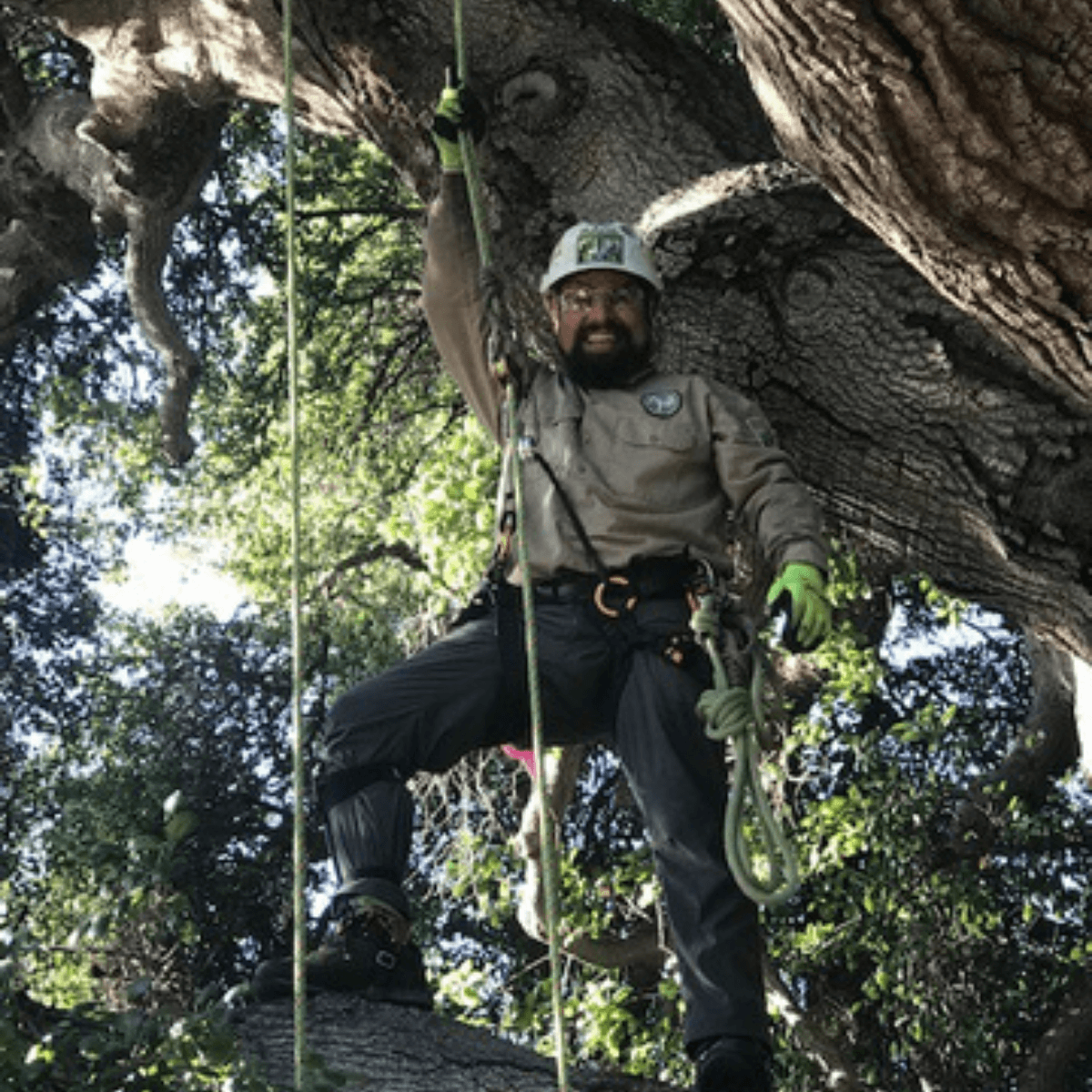
- Sectional dismantling. On tight lots, a climber or bucket takes the tree down in pieces from the top, roping each section down in a controlled lower. This is slower and more skilled, and it is how most backyard removals in La Verne and Claremont actually happen.
- Crane-assisted removal. When a tree is too dead or too dangerous to climb, or sits directly over a structure, a crane lifts whole sections out cleanly and sets them down away from the house. It is the safest option for hazardous trees and often does the least damage to the property.
Step 5: Rigging and controlled lowering
Here is what separates a professional job from a risky one. Every heavy limb is rigged with ropes and pulleys and lowered deliberately, not dropped and hoped for. Gravity is predictable only when you control it. Controlled rigging is how a crew takes down a 60-foot tree over a patio without cracking a single tile. It is slower than just cutting and letting pieces fall, and that is exactly the point.
Step 6: Processing the wood
As sections come down, they get processed. Brush and smaller limbs go through the chipper. Larger logs are cut to manageable size and loaded out, or left stacked if you want the firewood. A well-run crew keeps this moving so the debris does not pile up and turn the yard into an obstacle course.
Step 7: The stump
Cutting the tree down leaves a stump, and the stump is a separate decision. If you plan to replant, lay sod, pour concrete, or build over the area, you will want it ground out below grade. Our stump removal and grinding service handles that, either as part of the removal or as a follow-up. Doing it in the same visit is almost always cheaper than calling a crew back later. If you leave the stump, know that it can sprout, attract pests, and become a trip hazard over time.
Step 8: Cleanup and final walkthrough
The job is not done when the tree is down. A professional crew chips the brush, hauls the logs, rakes the debris, and blows off the hardscape. The goal is simple: when you walk outside afterward, you see that the tree is gone and almost no evidence that a crew was ever there. A final walkthrough confirms you are satisfied before anyone leaves.
How long does a tree removal take?
It depends entirely on the tree and the setup, but here is a rough sense. A small ornamental in an open yard might be down and cleaned up in an hour or two. A medium tree on a typical residential lot is usually a half-day job. A large mature tree that has to be dismantled in sections over a house, or removed with a crane, can take a full day or more. Access is often the deciding factor. A crew can process an open-yard tree far faster than one boxed into a tight backyard where every piece has to be roped down by hand. Your arborist can give you a realistic time estimate when they quote the job.
What you can do to prepare
You do not have to do much, but a few things help the day go smoothly. Clear vehicles out of the driveway and away from the work area so the crew has room to stage equipment and drop wood. Move patio furniture, potted plants, and anything fragile out of the drop zone. Make sure the crew can access any gates or side yards they will need, and unlock them ahead of time. If you have pets, plan to keep them inside during the work, since a yard full of saws and falling limbs is no place for them. And if there is anything on the property you are especially worried about protecting, point it out during the pre-work walkthrough so the crew can plan around it.
Why the process matters
Every one of these steps exists for a reason, and most of them are about safety and protecting your property. Tree work is one of the most dangerous jobs in the country. An uninsured crew that skips the planning, the rigging, and the protection is gambling with your home and, if someone gets hurt on your property, potentially with your liability. That is why certification, insurance, and a real process are worth paying for.
When conditions turn a routine removal into an emergency, like a tree that comes down in a Santa Ana event, the process compresses but the principles hold. Our 24/7 emergency service brings the same planning and rigging discipline to urgent calls across La Verne, Glendora, San Dimas, and the surrounding Southern California communities.
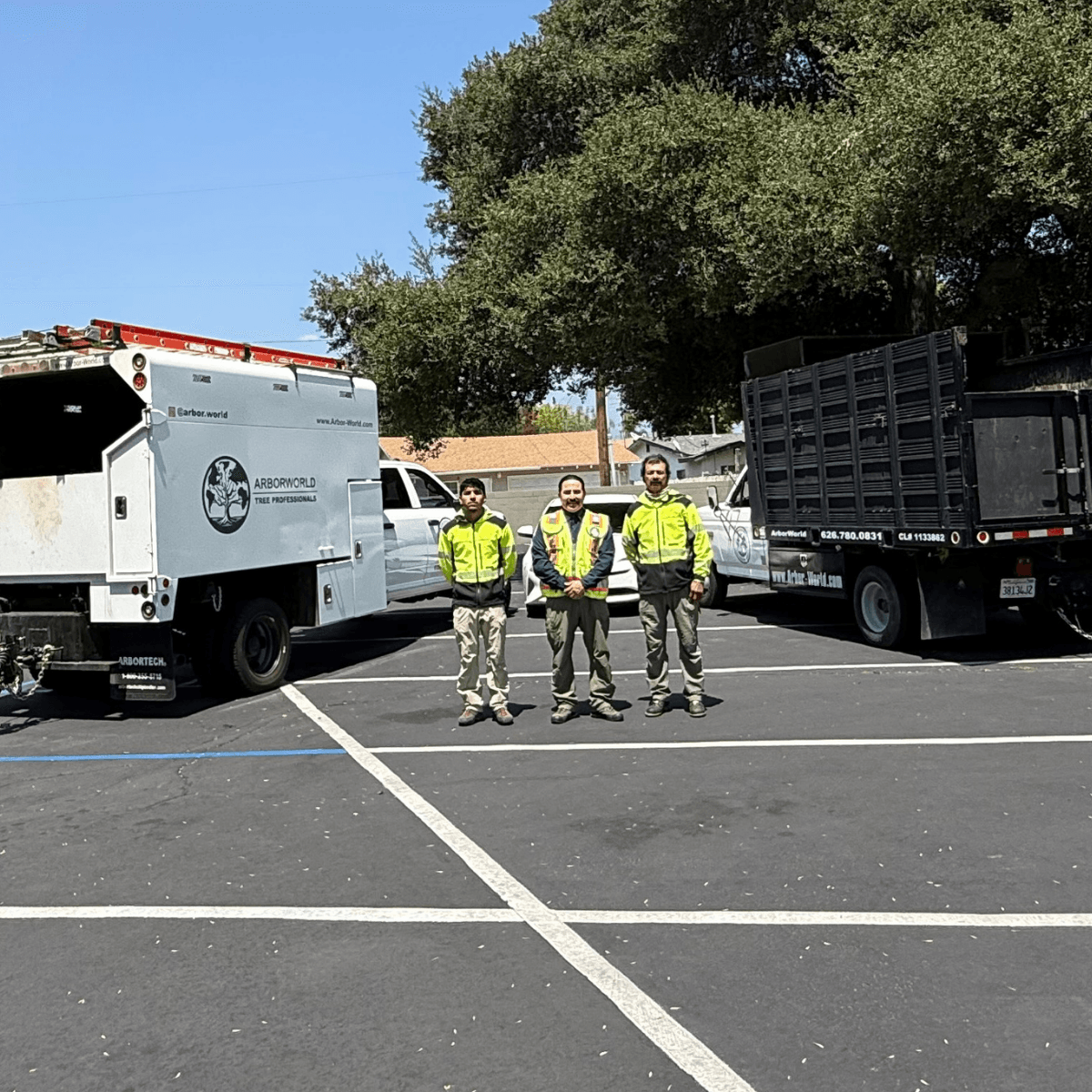
ArborWorld has run this process on thousands of removals over 23 years. Every job is led by an ISA Certified Arborist and backed by a workmanship guarantee. Call (626) 779-8786 or request a free estimate to get started.