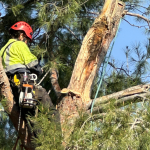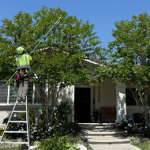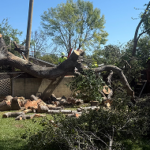
ArborWorld provides palm specialist services across La Verne, Claremont, Glendora, Pasadena, and the surrounding San Gabriel Valley communities. We trim, remove, diagnose, and treat palms – from a single queen palm in a Covina backyard to a row of mature Canary Island date palms on a Pasadena estate. ISA Certified Arborists on every job, 23 years working palms in Southern California, and a clear understanding of what separates proper palm care from the kind that causes long-term damage.
Why Palm Care Is Its Own Specialty
Unlike most trees, a palm grows from a single growth point at the top of the trunk called the meristem. This is the only area where new growth occurs. If it is damaged by disease, pests, lightning, or improper pruning, the palm usually cannot recover. Unlike hardwood trees, palms cannot grow new branches or replace damaged tissue from other parts of the trunk.
Palm root systems are also very different from those of traditional trees. Their roots are shallow and fibrous, growing close to the trunk rather than spreading widely for support. Because of this, palms can become unstable in wet soil or on sloped properties, sometimes developing a lean that cannot be corrected.
These differences are why palm care requires specialized knowledge. Whether trimming, assessing health, or removing a large palm, the approach is very different from standard tree work.
Palm Species We Work With Across the San Gabriel Valley
The San Gabriel Valley a wide variety of palm species, each with distinct care requirements, failure modes, and disease susceptibilities. The most common ones we work on:
- Mexican fan palm (Washingtonia robusta). The tall, slender palm that defines the Southern California skyline. Frond hangers are a major Santa Ana wind hazard. Seed pods are heavy and drop without warning on taller specimens.
- California fan palm (Washingtonia filifera). The native desert fan palm, stockier and shorter than its Mexican cousin. More cold-tolerant. The natural petticoat of dead fronds creates a fire hazard under CAL FIRE defensible space rules in many foothill communities.
- Canary Island date palm (Phoenix canariensis). Large, formal, and long-lived. Common in estate landscapes across Pasadena, San Marino, and Arcadia. Highly susceptible to Fusarium wilt, which is fatal. Requires specific nutritional management to stay healthy in San Gabriel Valley soils.
- Queen palm (Syagrus romanzoffiana). One of the most popular residential landscape palms across the San Gabriel Valley. Fast-growing and attractive, but susceptible to multiple nutritional deficiencies and vulnerable to pink rot and Ganoderma butt rot.
- King palm (Archontophoenix cunninghamiana). Self-cleaning ornamental palm common in warmer San Gabriel Valley microclimates. Crownshaft damage and crown rot are the primary concerns.
- Mediterranean fan palm (Chamaerops humilis). A smaller multi-stem fan palm used as a specimen or in groupings. Cold-hardy and drought-tolerant but can develop structural issues across stems as it ages.
- Pygmy date palm (Phoenix roebelenii). Common smaller ornamental in residential and commercial landscapes. Susceptible to nutritional deficiencies similar to other Phoenix species.
- Date palm (Phoenix dactylifera). Less common in residential settings but present on larger properties. Similar disease susceptibility profile to the Canary Island date palm.M
Palm Trimming
Palm trimming is the service we get called for most often, and it is also the service where bad practice causes the most damage. Understanding what proper palm trimming looks like, and what it does not look like, is worth knowing before you hire anyone to touch your palms.
What Proper Palm Trimming Includes
A proper palm trimming removes dead and dying fronds, old dried fruit stalks and seed pods, and hangers (old fronds that have not yet fallen but are hanging against the trunk). It leaves enough live frond mass for the palm to photosynthesize and produce food for continued growth. On most palms, this means leaving at minimum the fronds in the nine o’clock to three o’clock horizontal range and everything above, even if some of those fronds have yellowing tips or look less than perfect.
What We Never Do
We do not perform what the industry calls a hurricane cut, which strips the palm back to a small cluster of fronds at the very top. The name implies storm protection. The reality is the opposite. A severely over-pruned palm has less structural resistance to high wind, not more. The remaining fronds at the top cannot support the structural loads that a fuller crown distributes. The palm is also severely stressed nutritionally because the fronds it needs to produce food have been removed. Over-pruned palms are weaker, more vulnerable to disease, and more likely to fail in a Santa Ana event than properly maintained palms. If another service is telling you that stripping your palms back is the way to prepare for wind season, that is not accurate.
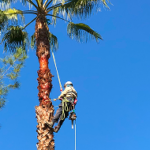
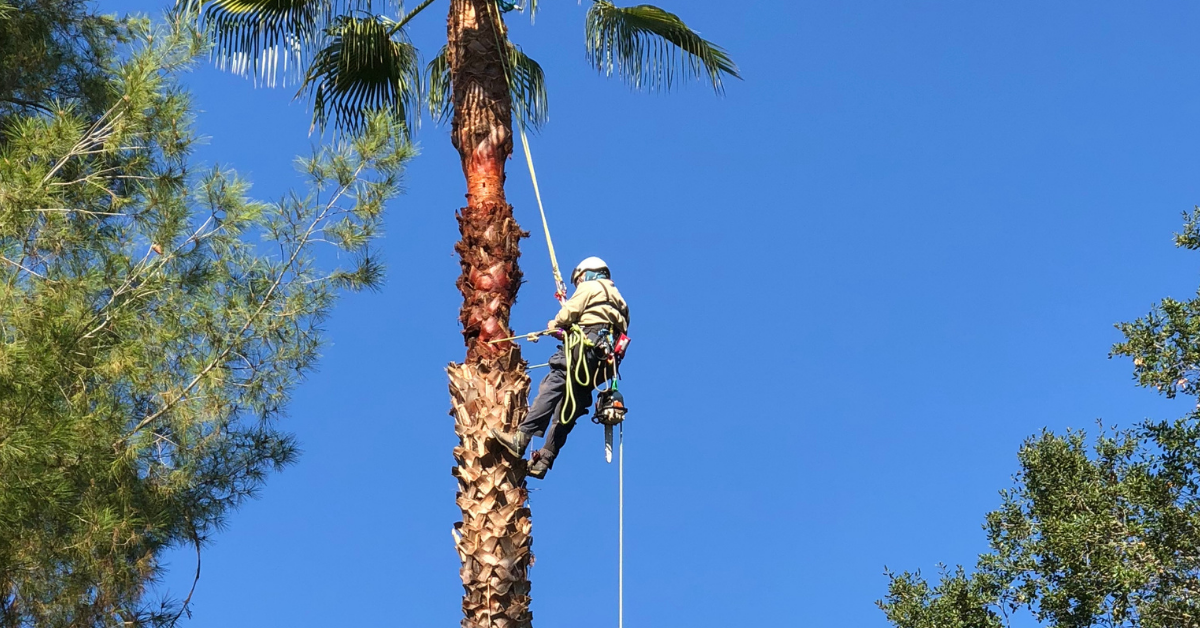
We also do not spike-climb palms. Climbing spurs damage the trunk tissue on palms in ways they do not on hardwoods, creating wounds that do not heal properly and provide entry points for disease. Our climbers use rope and saddle climbing techniques on palms, not spikes.
Timing for Palm Trimming
Palms can technically be trimmed year-round because they do not have a traditional dormant season the way deciduous trees do. However, late spring before Santa Ana season begins is the most common and practical timing for the San Gabriel Valley, addressing the most urgent risk (hangers and heavy seed pods before high winds) while giving the palm the full growing season to recover from the work. We also schedule pre-season trimming for clients who want their properties ready before June when fire season and Santa Ana weather ramps up.
Palm Removal
Removing a tall mature palm requires different planning than removing a broadleaf tree of the same height. The fibrous root system is shallow and does not provide the same anchor as a hardwood’s lateral root structure. The trunk is dense and uniform rather than having the branching structure that allows conventional rigging. On Mexican fan palms over structures, crane-assisted removal is often the safest approach, lifting sections cleanly rather than dropping them through a non-branching trunk column.
Common reasons we remove palms across the San Gabriel Valley:
- Fusarium wilt in Canary Island or date palms, for which there is no effective cure once the disease has progressed.
- Ganoderma butt rot, which destroys the base of the trunk structure and cannot be reversed.
- Lightning strikes that have destroyed the meristem.
- Palms that have outgrown their location and are creating conflicts with structures or power lines.
- Dead palms that need to come down before they fail on their own.
- Site clearing and landscape redesign.
Palm Diseases and Health Issues
Correctly diagnosing what is affecting a palm requires knowing the species, understanding the local soil chemistry, and distinguishing between disease and deficiency symptoms that often look similar from the outside. This is where ISA Certified Arborist expertise changes the outcome.
Fusarium wilt
Fusarium wilt (Fusarium oxysporum f. sp. canariensis) is a vascular disease that kills Canary Island date palms and certain other Phoenix species by blocking water movement through the trunk. It cannot be cured. The disease spreads through infected pruning tools, which is why tool sterilization between palms is critical when working on Phoenix species. Early signs include one-sided browning starting with older fronds on one side of the crown. By the time the spear leaf collapses, the palm is dead.
Ganoderma butt rot
Ganoderma zonatum is a fungal pathogen that destroys the structural tissue at the base of the palm’s trunk. The first external sign is typically a large shelf-like conk at the base. By the time the conk appears, significant internal damage has already occurred. There is no treatment. Affected palms should be removed before structural failure, and the stump should be removed rather than left in the ground as a reservoir of the pathogen.
Pink rot
Pink rot (Nalanthamala vermoesenii) affects queen palms and several other species, causing decay of new growth, crown rot, and a distinctive pink or salmon discoloration on affected tissue. It tends to be opportunistic, establishing after cold damage, mechanical injury, or over-watering. Caught early, it can sometimes be managed with appropriate fungicide applications and correcting the underlying stress conditions.
Nutritional deficiencies
Nutritional deficiency is one of the most common causes of palm decline in the San Gabriel Valley. Southern California soils are frequently alkaline, and high pH locks up several nutrients that palms require even when those nutrients are present in the soil. The California Department of Food and Agriculture maintains resources on soil testing and nutrient management for California landscapes.
- Manganese deficiency (frizzle top). Primarily affects queen palms and date palms. New growth emerges with a frizzled, distorted, dwarfed appearance. Treated with soil or foliar applications of manganese sulfate applied to the root zone or directly to the foliage, where it is available before alkaline soil binds it.
- Potassium deficiency. Translucent or necrotic spotting on older fronds, eventually turning completely brown from the tip inward. Common in queen palms across the San Gabriel Valley. Treated with slow-release potassium fertilizer to the root zone.
- Magnesium deficiency. Broad yellow banding on the outer margins of older fronds with green centers. Treated with slow-release magnesium sulfate.
- Boron deficiency. Distortion and accordion-folding of new growth. Less common, seen on palms in very sandy or leached soils.
General lawn fertilizer applied to the soil surface does very little for palms and can worsen some deficiencies by feeding competing turf. The UC Cooperative Extension and Palm Society of Southern California both publish guidance on proper palm nutrition programs for Southern California conditions.
Lethal yellowing and lethal bronzing
Lethal yellowing is a phytoplasma disease more common in Florida and the Gulf Coast but detected in Southern California.
Santa Ana Wind Preparation for Palms
Santa Ana winds can put significant stress on palm trees. Proper maintenance before wind season can help reduce the risk of damage.
- Remove dead hanging fronds (hangers): Dead fronds that remain attached to the trunk can break loose in high winds and become dangerous projectiles.
- Trim heavy fruit stalks and seed pods: Queen palms and other fruiting species often develop heavy seed clusters that can increase stress on the tree during strong winds.
- Avoid over-pruning: Removing too many healthy fronds can weaken a palm’s ability to handle wind. A full, healthy canopy helps distribute wind pressure more evenly.
- Inspect leaning palms: Mexican fan palms and other tall species can become unstable after heavy rain because of their shallow root systems. Leaning palms should be evaluated before wind season, especially if they are near structures.
- Schedule preventive maintenance: Regular inspections and pruning before Santa Ana season can help identify potential hazards before they become safety risks.
What a Palm Specialist Consultation Includes
If you have palms that are declining, showing unusual symptoms, or that you want assessed before making a removal decision, an ArborWorld palm consultation covers:
- Species identification and baseline health assessment.
- Frond condition evaluation, distinguishing normal senescence from disease and deficiency symptoms.
- Trunk and base inspection for disease indicators, Ganoderma conks, and structural concerns.
- Root zone assessment for drainage, soil conditions, and competing vegetation.
- Differential diagnosis for the most common disease and nutritional conditions affecting the specific species.
- Written treatment plan or removal recommendation with honest assessment of expected outcomes.
- Tool sterilization records for Phoenix species work, confirming that disease transmission protocols were followed.
What’s Included with Every Palm Service Job
- Species-appropriate trimming using rope and saddle climbing, never spikes.
- Proper frond removal without over-pruning.
- Tool sterilization between palms, especially on Phoenix species where Fusarium risk is present.
- Complete debris haul-off, including fronds, fruit stalks, and hangers.
- Full cleanup before we leave.
- Workmanship guarantee and no-surprise pricing.
- Diagnosis and treatment recommendations for palms showing health decline.
New customer offers: 10% off any service over $500, $100 off same-day hires. Military, senior, first-responder, and teacher discounts available. Flat-rate pricing on all estimates. Contact us!
Service Area
La Verne, Claremont, Glendora, San Dimas, Upland, Rancho Cucamonga, Diamond Bar, City of Walnut, West Covina, Covina, Pasadena, South Pasadena, San Marino, Altadena, Arcadia, Sierra Madre, Monrovia, Bradbury, and Pomona.